Chapter 22 Stellar and galactic engineering
10 minute read
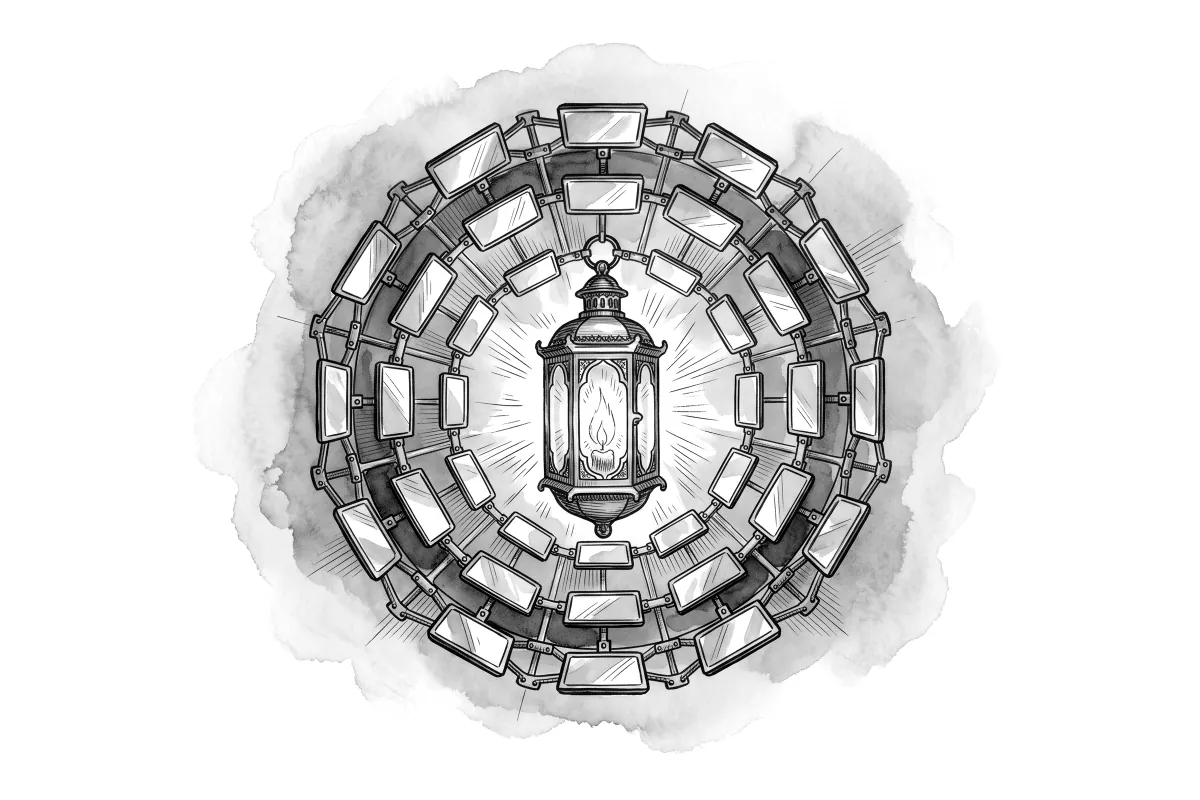
Beyond the thin blue atmosphere of Earth stretch the spiral arms of the Milky Way. For four billion years, life on our planet has survived on a tiny trickle of stray starlight. Every forest, ocean current, and human city runs on the small fraction of solar energy that strikes one rocky world. Yet nothing in the laws of thermodynamics confines intelligence to the cradle where it was born.
In 1964, working at the Byurakan Observatory in Armenia, the Soviet astronomer Nikolai Kardashev asked a foundational question. How could we recognize a technological civilization far older than our own? Politics, languages, and biological forms are local accidents that do not carry across thousands of light-years. Thermodynamics, however, is universal. Every living system and thinking machine must draw in low-entropy free energy and shed high-entropy waste heat into the sky. Kardashev proposed measuring civilizations by a single physical yardstick, the total power they command. A decade later, Carl Sagan turned Kardashev's discrete tiers into a continuous logarithmic scale based on power in watts, .
On Sagan's scale, each full unit step represents a ten-billion-fold leap in power. A benchmark rating of 1.0 corresponds to 10 quadrillion watts (1016 watts). Harnessing all 174 quadrillion watts (1.74 × 10¹⁷ watts) of sunlight falling on Earth reaches a rating of 1.12. Today, all human industry and computing consume around 20 terawatts (2 × 10¹³ watts), placing humanity near 0.73. A Type II civilization outgrows its home world and captures the full radiant output of its host star. Sagan's 2.0 benchmark sits at 1026 watts, while capturing the full luminosity of our Sun—3.828 × 1026 watts—reaches a rating of 2.06. Finally, a Type III civilization commands 1036 watts at benchmark 3.0. Tapping all hundred billion stars and black hole accretion disks across a galaxy yields roughly 4 × 1037 watts, or 3.16.
22.1Dyson swarms and nested computation shells
Consider the sheer prodigality of our Sun. Every second, proton-proton fusion in the solar core converts 4.26 million metric tons of matter into radiant energy. That fusion core releases 3.828 × 1026 joules of sunlight every second at a surface temperature of 5,778 kelvins. Out of that torrent of free energy, Earth intercepts less than one two-billionth. The remaining 99.99999995% streams unused into empty space.
In 1960, the physicist Freeman Dyson published a short paper in 'Science' that reshaped our view of technological futures. Dyson observed that any civilization with exponentially growing energy and computing demands will soon outgrow a single planet. Within a few millennia, an expanding civilization must dismantle a minor planet or asteroid belt to harvest starlight directly.
Science fiction often depicts Dyson's concept as a rigid metal sphere enclosing a star like an eggshell. That picture violates both Newtonian mechanics and materials science. By Isaac Newton's shell theorem, a rigid hollow sphere feels zero net gravitational pull from the star inside it. Any comet impact would set the shell drifting until its inner wall crashed into the solar photosphere. Worse still, no chemical bond could endure the crushing stress needed to keep a planetary-scale dome from buckling under solar gravity.
What Dyson actually proposed is a Dyson swarm. A swarm consists of billions of independent solar collectors and computing habitats orbiting in phased rings or hovering as statites. A statite is an ultralight reflective mirror sail that balances outward radiation pressure against inward solar gravity. Because specular reflection bounces incoming photons back toward the star, it transfers twice their momentum. Outward radiation force therefore equals twice the solar luminosity times sail area, divided by four pi, distance squared, and light speed. Both radiation pressure and solar gravity fall off with the inverse square of distance from the Sun. They cancel at every distance if the mirror sail's mass per unit area matches the critical density .
How much matter does it take to intercept all the Sun's light at Earth's orbital radius of one astronomical unit (149.6 million kilometers)? A sphere of that radius has a surface area of 2.81 × 10²³ square meters. Even with thicker orbiting photovoltaic foils weighing 100 grams per square meter, the entire swarm weighs only 2.8 × 10²² kilograms. That is less than 10% of the mass of Mercury (3.3 × 10²³ kilograms), a sun-baked world rich in iron, silicon, aluminum, and titanium.
Unbinding Mercury against its own local self-gravity takes 1.8 × 1030 joules. Lifting its ore outward in the Sun's deep gravity well requires under 4 × 1032 joules of work. That total lifting budget equals just 12 days of solar output. By landing a seed factory of John von Neumann's self-replicating constructors on Mercury, equipped with solar arrays and electromagnetic mass drivers, a civilization can let exponential growth do the work. With a doubling time of one year, robotic mines could disassemble Mercury and complete a solar Dyson swarm in under a century.
What would a civilization do with the power of a star? In the late 1990s, Robert Bradbury combined Dyson's swarm with Rolf Landauer's bit-erasure bound from Chapter 19 and Sadi Carnot's heat-engine law. The result is a Matrioshka brain, a nested architecture of concentric Dyson shells engineered for maximum computation.
The innermost shell orbits close to the star, absorbs 5,778-kelvin solar photons, and runs dense processors at 1,000 kelvins. Those inner computers radiate their waste heat outward as 1,000-kelvin infrared light. A larger second shell captures that infrared glow to power a second tier of processors at 300 kelvins. Concentric shell after shell steps the temperature down until the outermost veil radiates its exhaust into deep space at 10 kelvins, approaching the 3-kelvin cosmic microwave background floor.
Dividing the Sun's luminosity by the Landauer energy cost at that cold outer boundary gives the maximum irreversible bit-erasure rate of a solar Matrioshka brain:
The lower bound corresponds to an outer radiator at 10 kelvins, while cooling the outer shell to the 3-kelvin cosmic microwave background floor reaches the upper limit. By comparison, a human brain executes roughly 10 quadrillion (1016) synaptic operations per second, and all silicon computers on Earth today perform around one septillion (1024). A single star woven into a Matrioshka brain could sustain 1032 human-equivalent minds simultaneously. In one microsecond, it could think through more subjective years of experience than every human who has ever lived.
22.2Relativistic rockets and laser sails
A civilization that masters its home star soon faces a wider horizon. Our Sun is one of two hundred billion stars scattered across a galactic disk 100,000 light-years wide, and its nuclear fuel will last only another five billion years. Can intelligent life cross the interstellar gulf and settle an entire galaxy?
Consider first a rocket that carries its own propellant. Every rocket accelerates by hurling exhaust mass backward so that momentum conservation pushes the ship forward. As Konstantin Tsiolkovsky showed, the rocket must also accelerate all the unburned fuel it still carries for later use. At speeds approaching the speed of light, special relativity compounds this burden. In 1946, Jakob Ackeret integrated relativistic four-momentum conservation for a rocket of initial wet mass, dry payload mass, and exhaust speed. He showed that the final cruise speed as a fraction of light speed obeys the relativistic rocket equation:
This exponential law is a strict gatekeeper for onboard fuel. Suppose we want to reach one-tenth the speed of light, crossing the 4.24 light-years to Alpha Centauri in just over forty years. Everything depends on how close the engine's exhaust speed comes to the speed of light.
Chemical rockets burning hydrogen and oxygen achieve an exhaust speed of only 4.5 kilometers per second, or 15 millionths of light speed. Reaching one-tenth the speed of light with chemical fuel requires an Ackeret mass ratio of e6689 ≈ 102905, or e6667 ≈ 102895 classically. That vastly exceeds the 1080 atoms in the observable universe. Chemical rockets can lift us off a planet, but they cannot carry us to the stars.
Nuclear fusion rockets burning deuterium and helium-3 release 0.39% of their fuel's rest mass as kinetic energy, expelling plasma through a magnetic nozzle at 5% to 8% of light speed. Suppose a fusion vessel accelerates to one-tenth the speed of light and brakes to a halt at Alpha Centauri using an exhaust speed of 5% of light speed. That mission requires an Ackeret mass ratio of 55.3, compared with e4 ≈ 54.6 classically. Studies such as Project Orion and Project Daedalus showed that pulsed fusion drives can realistically reach 5% to 12% of light speed. Matter-antimatter annihilation of protons and antiprotons goes further still, channeling energy into charged pions moving at 30% to 60% of light speed. Deflecting those pions with a magnetic nozzle reaches 50% to 80% of light speed with mass ratios between 4 and 10. At 80% of light speed, relativistic time dilation compresses shipboard travel time by a factor of 1.67.
Better still, a civilization can bypass the rocket equation entirely by leaving the engine and fuel tank at home. As Robert Forward showed in 1984 and Philip Lubin later developed, a phased laser array in a Dyson swarm can push a light sail across space. The array fires a coherent laser beam onto an ultralight dielectric mirror sail. Including the relativistic Doppler shift, reflecting the laser photons delivers continuous thrust without onboard fuel: .
Pushed by a laser array, a self-replicating von Neumann probe can rapidly accelerate to 20% or 50% of light speed. At its destination star, the craft brakes using a superconducting magnetic sail against the ionized interstellar plasma. Upon arrival, the probe mines local asteroids, builds a daughter Dyson swarm, and launches new probes to neighboring stars. Suppose the settlement front advances at a modest average speed of 2% of light speed, pausing centuries at each star to rebuild. Even at that leisurely pace, crossing the 100,000-light-year diameter of the Milky Way takes just 5 million years.
Five million years is only 0.036% of the 13.8-billion-year age of the cosmos. The tension between that rapid galactic crossing time and our unengineered night sky is Enrico Fermi's 1950 paradox. Either the leap from barren rock to spacefaring intelligence is guarded by a steep evolutionary bottleneck—Robin Hanson's Great Filter—or mature civilizations choose quieter modes of existence.
22.3Tapping the spin of black holes
Over billions or trillions of years, every star burns through its nuclear fuel and fades. When the last fusion cores go cold, the richest concentrated reservoir of free energy in the universe lies locked inside the spinning spacetime of rotating black holes.
As we saw in Chapter 4, a non-rotating Schwarzschild black hole has a single spherical event horizon at radius 2GM/c2. Real astrophysical black holes, however, spin rapidly. In 1963, Roy Kerr solved Albert Einstein's field equations for a rotating black hole of mass M and spin parameter a (angular momentum divided by M times c). A Kerr black hole possesses two distinct surfaces. The inner surface is the outer event horizon at radius . The outer surface is the static limit or ergosurface, where the spin term under the square root is multiplied by the squared cosine of the polar angle.
The static limit touches the event horizon at the north and south poles and bulges outward at the equator. Between the event horizon and the static limit lies a flattened, doughnut-shaped region outside the horizon called the ergosphere. Inside the ergosphere, relativistic Lense-Thirring frame-dragging twists spacetime so violently that space itself flows around the black hole faster than light relative to distant stars. Every particle inside the ergosphere is forced to rotate with the black hole, yet spacecraft and light beams can still enter the ergosphere and escape back out.
In 1969, Roger Penrose discovered how to tap this spinning geometry. Inside the ergosphere, frame-dragging tips the spacetime time-translation symmetry vector sideways until it becomes spacelike. Consequently, a particle hurled backward against the spin inside the ergosphere can have strictly negative total energy as measured from infinity. A civilization can exploit this negative-energy zone via the Penrose process. An incoming craft dives into the ergosphere with positive energy and fires a sacrificial fragment backward against the rotation into a negative-energy orbit. That fragment falls through the event horizon, while the remaining craft escapes to infinity. By energy conservation, the escaping craft returns with more energy than the original payload brought in, boosted by the magnitude of the negative energy swallowed by the hole.
Swallowing that negative-angular-momentum fragment slows the black hole's rotation slightly, converting the rotational kinetic energy of curved spacetime into usable work while obeying Stephen Hawking's area theorem. Once all spin is extracted from a maximally spinning Kerr black hole, an untappable irreducible mass remains, equal to the initial mass divided by the square root of two. That sets the maximum Penrose energy extraction efficiency:
Engineers can also tap this spin directly as electromagnetic power. In 1972, William Press and Saul Teukolsky showed that electromagnetic waves bouncing through the ergosphere are amplified by superradiant scattering. Five years later, Roger Blandford and Roman Znajek proved that magnetic fields threading a spinning horizon brake the black hole like a cosmic dynamo. Their Blandford-Znajek electromagnetic power scales with the square of the magnetic field, horizon radius, and dimensionless spin, . At 29.29%—or up to 42.3% for matter spiraling down a thin Kerr accretion disk—black hole engineering is over forty times as mass-efficient as hydrogen fusion (0.7%). Long after the last star goes dark, spinning black holes will remain the powerhouses of deep time.